Chess Master: Board Game
One Way Street EntertainmentBoard
4.82.25K Reviews
- Version
- 12.33
- Installs
- 10.00M
- Age Rating
- Everyone
Screenshots
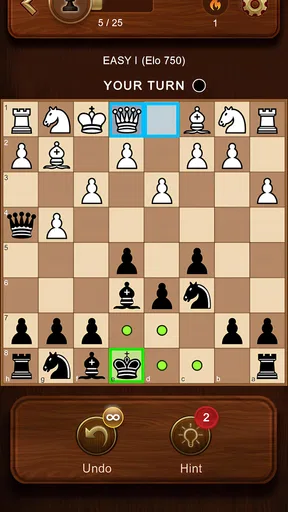
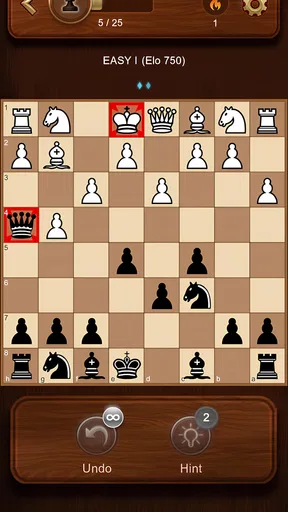
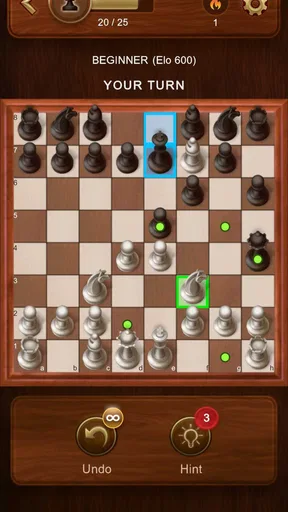
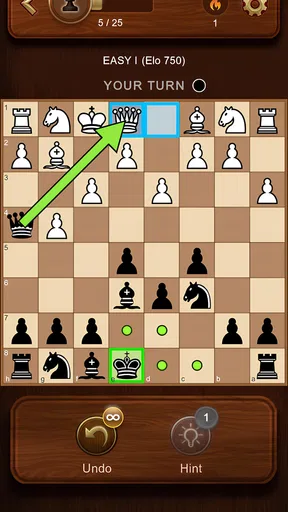
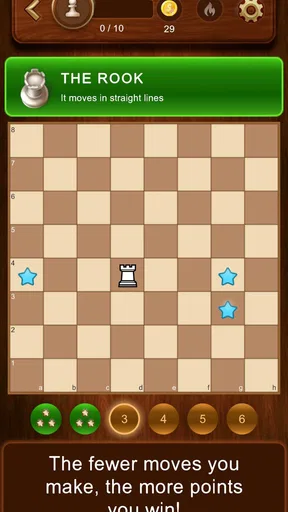

Our Review of Chess Master: Board Game
 Analysis by Appyee
I approached Chess Master: Board Game as a practical chess companion rather than a game I would open only when I had a few minutes to spare. That distinction matters. Its central promise is simple: help me move from casual play toward stronger chess habits. In my experience, the value is not just in placing pieces on a digital board, but in making each move feel like a small decision worth examining.
Developed by One Way Street Entertainment, this free board game is aimed at a broad audience, with an Everyone content rating. It has attracted a 4.8 average from around 343 thousand ratings and passed 10 million installs, which suggests that it has found a large audience among people who want an accessible way to play chess on a phone or tablet.
The most important question is not whether it can replace every dedicated chess service. It cannot be judged that way. The better question is whether it gives a beginner, returning player, or casual enthusiast a comfortable place to practise thinking ahead. For that purpose, I found its focused identity more useful than a crowded app full of unrelated chess material.
Why the “become a chess master” focus changes the experience
The strongest capability here is the way the game frames chess as a skill to build, not merely a match to finish. That sounds like a small difference, but it changes how I use it. Instead of rushing through moves because the board is always available, I am encouraged to treat a position as a problem: What is threatened? Which piece is poorly placed? What happens after the obvious capture?
That approach is especially helpful for players who know the rules but lose games through preventable oversights. A typical beginner does not need an encyclopedic opening database first. They need to stop leaving pieces undefended, notice simple checks, and understand why a quiet move can be stronger than an attractive attack. A focused chess game gives those habits room to develop.
I also like that the concept remains understandable immediately. There is no need to learn a new game system, collect cards, or manage a complicated progression structure before the chess itself begins. The board is familiar, the objective is familiar, and the learning curve comes from the decisions rather than from the interface.
That simplicity has a useful side effect: it makes the app suitable for short practice sessions. I can play a position when I have enough attention for chess, then stop without feeling that I have abandoned a large campaign. For a board game on mobile, that is an important strength. Chess rewards concentration, but daily life rarely offers an uninterrupted afternoon.
Turning each move into a small lesson
When I play with improvement in mind, I try not to measure success only by the result. A win can hide sloppy decisions, while a loss can reveal one recurring mistake. The app works best when I pause mentally before moving and ask myself to explain the move in plain language. “I am attacking the knight” is less useful than “I am attacking the knight, but my own king becomes exposed afterward.”
This habit is one of the less obvious benefits of using a dedicated chess game. It creates a repeatable workflow: inspect the position, identify forcing moves, compare candidate moves, then check the opponent’s likely reply. I do not need advanced theory to use that process. In fact, beginners often gain more from applying it to ordinary positions than from memorising long opening sequences.
A practical tip is to give yourself a short pause after every opponent move, even when the reply looks obvious. Many casual losses happen because a player responds automatically to a capture or an attack. That pause is where the improvement happens. The game supplies the board and the immediate challenge; I supply the discipline to look twice.
How the board feels during ordinary play
In everyday use, I would treat this as a straightforward digital board rather than a complete chess school. That makes it approachable, but it also means the quality of my experience depends heavily on how deliberately I play. Someone who taps rapidly through moves may get entertainment, yet miss much of the training value suggested by the master-oriented design.
I found the most useful rhythm to be a few serious moves followed by a quick review in my own head. If I make a mistake, I ask what type of mistake it was. Did I overlook a check? Did I move a piece twice while leaving another piece undeveloped? Did I assume the opponent would respond in the way I wanted? Naming the error is more actionable than simply feeling annoyed by the loss.
Another helpful workflow is to choose one theme for a session. I might focus on protecting the king, avoiding loose pieces, or improving development. This prevents the game from becoming a vague test of whether I am “good at chess.” It becomes a specific exercise. Even without turning the session into formal study, that narrow goal makes the app feel more purposeful.
Players should also be realistic about what a mobile chess game can do for them. Playing repeatedly does not automatically create understanding. If I make the same impulsive moves every time, I mainly practise those impulses. The app is most effective when I use it to slow down, compare options, and remember the positions that caused trouble.
A realistic use case: the short evening session
Imagine someone who learned chess years ago, remembers how the pieces move, but has not played regularly since school. After dinner, that person has fifteen or twenty minutes and wants something more mentally engaging than another scrolling session. This is where I think Chess Master: Board Game fits naturally.
I would begin with one game, not several. Before moving, I would look for immediate checks, captures, and threats. After the game, I would identify the first moment when my plan stopped making sense. If there is time, I would start another game with one simple goal, such as keeping every piece defended. That routine is modest, but it is repeatable, and repeatability matters more than an ambitious study plan that lasts two days.
For a parent introducing chess to a child, the Everyone rating also makes the game easier to consider as a family-friendly board-game option. I would still play alongside a young learner rather than handing over the device and expecting the app to teach everything. A child benefits from being asked why a move was chosen, not only from seeing whether it wins.
It can also suit a commuter or traveller who wants a quiet offline-style mental activity, provided the surrounding play conditions are comfortable. Chess requires more attention than a typical casual puzzle, so it is not ideal when the player is constantly interrupted. A short focused session is better than trying to calculate while distracted.
Where it compares well with usual alternatives
Compared with a physical chessboard, the app is more convenient. I do not need a second player sitting nearby, a table large enough for the pieces, or time to set everything up. The digital format removes friction, which is often the difference between practising and postponing practice.
Compared with a general puzzle game, it offers a deeper decision structure. A puzzle can test a single idea, while a chess game forces me to balance development, safety, material, and long-term plans. That makes the experience more demanding, but also more transferable to real play.
Compared with a large online chess platform, the appeal is its narrower purpose. Dedicated platforms are usually better for finding opponents, following competitive communities, studying extensive libraries, or tracking a detailed playing history. If those are the features I care about most, I would choose a specialised service instead. Chess Master: Board Game makes more sense when I want a direct board-game experience without turning every session into a social or competitive event.
Compared with a chess-learning course, it is less structured as a teacher. A course can explain principles step by step and give carefully selected exercises. This game is better understood as a place to apply those principles repeatedly. I would use it alongside instruction if I wanted serious improvement, not assume that playing alone covers tactics, endgames, openings, and strategic planning equally well.
The trade-off between simplicity and depth
The same focus that makes the game approachable can feel limiting for advanced players. A strong tournament player may want precise analysis, extensive opening preparation, engine comparisons, or a large competitive ecosystem. Those needs belong to a more specialised chess tool. This app is not the choice I would make for serious preparation before an important event.
There is also a motivational trade-off. A player who enjoys rankings, live opponents, chat, tournaments, and a constant stream of new challenges may find a focused board game too quiet. The absence of those distractions can be a benefit when I want concentration, but a drawback when I want social energy.
Another limitation is personal rather than technical: the app cannot decide how thoughtfully I will use it. If I treat every game as a race to finish, I may improve slowly. If I stop to examine recurring errors, the same board becomes a much better training environment. That means two people can have very different experiences with the same product.
I would also avoid expecting it to make chess easy. The game can provide practice, but chess remains demanding because every move changes the position. Beginners may still feel overwhelmed when several threats appear at once. My advice is to start with a narrow objective and accept that losing is part of the learning process, especially when a loss reveals a pattern that can be corrected.
Small habits that make the game more valuable
My first practical recommendation is to stop judging a move by how attractive it looks. A check or capture can be tempting, but the important question is what happens next. Before committing, I look at the opponent’s strongest forcing reply. This single habit catches many careless attacks.
Second, I would keep a mental note of the first serious mistake in each game. Not the final blunder after the position was already lost, but the earlier decision that created the problem. Was it moving the same piece repeatedly? Ignoring development? Failing to notice a pin? This turns a vague defeat into one concrete lesson.
Third, I would alternate between playing and explaining. After a game, I try to describe the turning point as if I were advising a friend. If I cannot explain why the move was bad, I probably have not learned enough from it yet. This is a surprisingly effective way to expose gaps in understanding without needing technical language.
Fourth, I would use short sessions to build consistency rather than attempting marathon play. Chess fatigue produces careless calculation, and tired games can reinforce bad habits. A brief, attentive session is more useful to me than a long sequence of automatic moves.
Finally, I would occasionally return to an opening position and choose a different plan. The point is not to memorise every variation. It is to notice how changing one early decision affects the rest of the game. That experiment helps connect individual moves with the broader shape of a position.
Who will get the most from it
This game is a strong fit for beginners who want to become more comfortable with chess without entering a complicated competitive environment. It also suits returning players who understand the rules but need regular practice to regain confidence. Casual board-game fans may appreciate that the challenge comes from thinking rather than from learning a large collection of app-specific mechanics.
I would especially recommend it to someone who wants a free way to practise on a phone and prefers a focused experience. The price removes an obvious barrier, while the Everyone rating makes it easier to share the game with younger players under sensible supervision.
It is less suitable for someone whose main goal is live competition against a large pool of opponents. It is also not my first recommendation for a player seeking a complete curriculum, deep analysis, or tournament-level preparation. In those cases, a dedicated online chess platform, a structured course, or a physical club would offer a better match.
The developer, One Way Street Entertainment, has kept the identity clear enough that I know what to expect: a board game built around chess practice and the ambition of getting stronger. The current version is 12.25, and it runs on devices using Android 7.0 or later, which makes it accessible to many older Android phones as well as newer models.
My final view after using it as a practice board
Chess Master: Board Game works best when I use it deliberately. Its real strength is not that it turns chess into something effortless; it gives me a convenient place to slow down and make better decisions. That is a meaningful distinction for anyone who already knows the rules but wants to stop playing on instinct.
I would recommend it to a friend who wants approachable chess practice, a family-friendly board-game option, or a quiet way to spend a short break. I would not recommend relying on it alone for advanced improvement or competitive preparation. Its simplicity is both its advantage and its boundary.
For me, the deciding factor is the quality of attention it encourages. If I open it merely to move pieces quickly, it is just another way to play chess. If I use each position to ask better questions, it becomes a practical training habit. That is why I see it as a worthwhile free starting point for players who want to build confidence one thoughtful move at a time.
Privacy and Permissions
See what permissions an app requests and how it handles your data.
- Photos/Media/Files
- read the contents of your USB storage
- Storage
- read the contents of your USB storage
- Wi-Fi connection information
- view Wi-Fi connections
- Other
- view network connections, full network access, run at startup, control vibration, prevent device from sleeping, Google Play license check
Verdict
Strengths of Chess Master: Board Game
- Works well for quick matches and longer strategic sessions.
- Helpful for beginners learning basic chess tactics and patterns.
- Offline play makes it useful when no internet connection is available.
- Simple board design keeps the focus on the game.
- Suitable for casual players of different skill levels.
Limitations of Chess Master: Board Game
- Advanced players may find the available challenge limited.
- Some features may feel repetitive after extended play.
- The interface may lack customization options for experienced users.
- Matchmaking or online features may depend on an active connection.
- Ads or optional purchases can interrupt the overall experience.
Other Releases by One Way Street Entertainment
View All
Checkers: Classic Board Game
Board4.8
Similar Picks in This Category
View All
Ludo King®
Gametion4.1

Ludo
Yarsa Games4.6

Tile Master® - Matching Game
Higgs Studio3.6

Checkers Online
CC Games4.6

Dominoes
Loop Games4.7

Chess
Chess Prince4.6
Frequently Asked Questions
What is Chess Master: Board Game?
Chess Master: Board Game is a mobile chess app designed for players who want to practice and play classic chess on an Android or iOS device. It typically offers standard chess rules, an interactive board, selectable difficulty levels, and the option to play against the computer or another person. It is suitable for beginners learning the basics as well as experienced players looking for casual matches.
Can beginners learn chess with Chess Master: Board Game?
Yes, the game can be useful for beginners because it provides a simple way to become familiar with the board, pieces, legal movements, captures, check, and checkmate. New players can usually start with easier computer opponents and gradually increase the difficulty. However, users looking for a complete structured course with detailed lessons, puzzles, and advanced analysis should check the available learning tools before downloading.
Can I play Chess Master: Board Game offline?
Chess Master: Board Game may support offline matches against the device, which is convenient when you do not have an internet connection or want to avoid online competition. Offline availability can depend on the specific version and platform, so it is worth checking the app description and permissions before installation. Online features, advertisements, updates, leaderboards, or multiplayer services generally require an active connection.
Does Chess Master: Board Game include multiplayer or online play?
The multiplayer options depend on the edition of Chess Master: Board Game installed on your device. Some versions focus mainly on single-player matches against artificial intelligence and may also allow two people to play locally on the same device. If online matchmaking, friend challenges, rankings, or account-based synchronization are important to you, review the current store listing carefully because these features may not be included in every release.
Is Chess Master: Board Game free to download, and does it contain ads or purchases?
Chess Master: Board Game may be available as a free download, but the exact monetization model can vary between Android and iOS versions. Free editions commonly include advertising, optional purchases, or premium features such as additional themes, difficulty settings, or an ad-free experience. Before installing, check the store page for in-app purchase details, privacy information, and whether the game requires payment for its complete feature set.
Play our best games!


